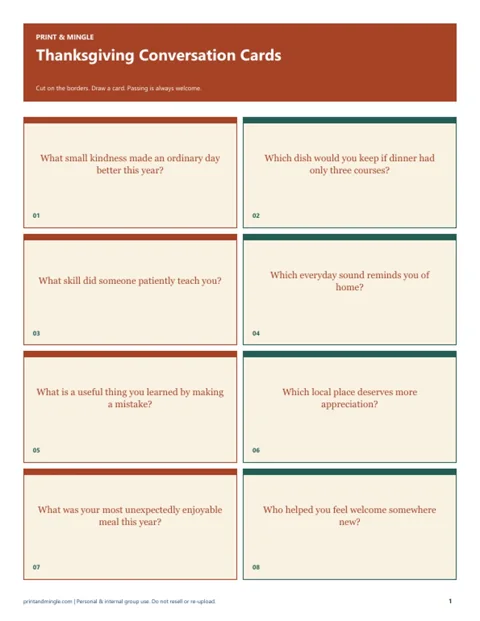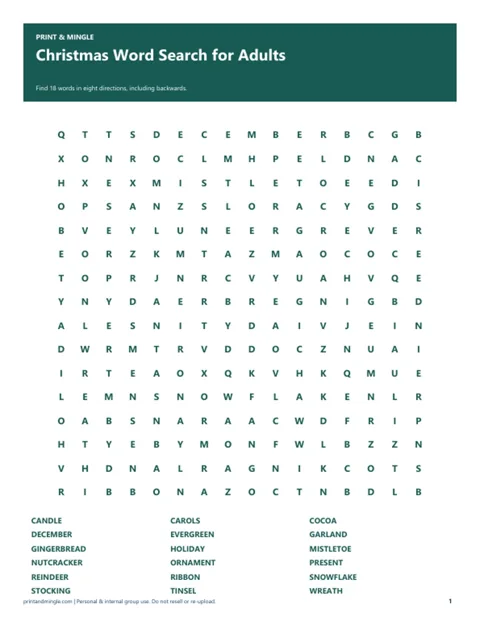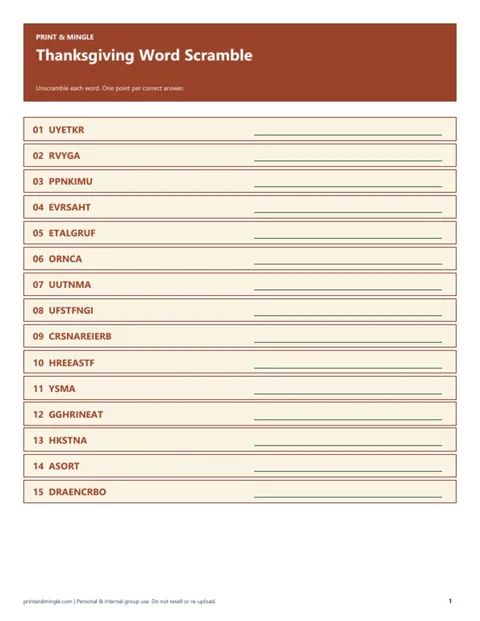
Free Printable Friendsgiving People Bingo
Jump to downloadSix colorful Friendsgiving people bingo boards using 24 original food-and-friendship prompts, with simple mingling rules.
A Friendsgiving icebreaker that starts conversations
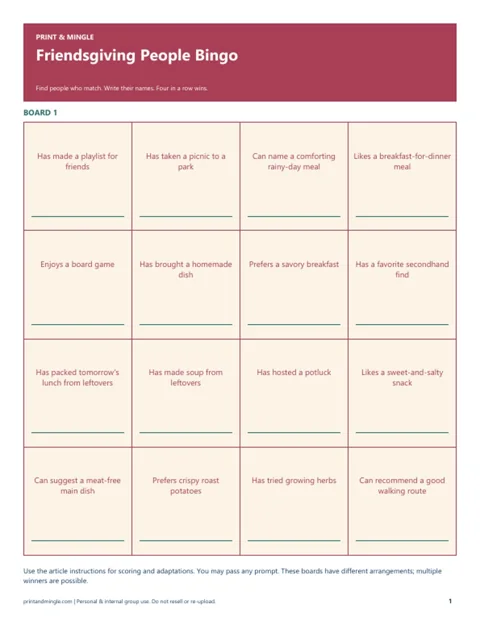
Friendsgiving people bingo is a mingling game: players look for guests who match the descriptions on their boards and write down their names. There are no numbers to call and no host pulling slips from a bowl. The prompts focus on food preferences, everyday hobbies, and small acts of friendship, so people can join without sharing personal histories. Use it before dinner while arrivals are settling in, not while someone is balancing a hot plate. Allow 15 to 20 minutes and explain that meeting a few new people matters more than filling every square. A pen and one printed board are all each guest needs.
Six boards, 24 prompts, and a four-by-four grid
The pack contains six different 4 by 4 boards created from a pool of 24 original prompts. Each board has 16 filled squares and no free center. Boards deliberately overlap, but their selection and arrangement differ. Print the six-board pack once for six players; for a larger gathering, print it again and distribute matching versions to people in different parts of the room. The game supports larger groups, but the pack does not claim to contain 24 unique boards. Choose A4 or US Letter before printing. Keep one spare copy nearby for a late arrival or a guest who wants a replacement.
Set the rules before handing out pens
Ask players to speak to a person before writing their name. A guest decides whether a description fits them; nobody needs to prove a hobby or produce a photograph. For six to nine guests, a name may appear twice on a board, but only once in a single winning line. For ten or more, aim for a different name in each square. Players should not put their own names on their boards. Announce that a row, column, or diagonal of four completed squares wins the first round. Explain these choices before starting, because changing the repeat-name rule halfway through can make the result confusing.
An example conversation and a winning line
Suppose a square says that someone has learned a recipe from a friend. Ask a guest whether that sounds like them, then listen for a short answer about the recipe. If they agree, write their first name in that square. A follow-up such as asking what makes the dish easy to cook keeps the exchange natural. Do not demand a second story before letting them move on. When four squares form a complete line, the player calls bingo. Check the names and ask the player to share one interesting thing they learned, with the named guest free to decline a public retelling.
Keep a small group from getting stuck
Some prompts will not match anyone, and that is normal. The goal is a line, not a guaranteed full board. If several people are stuck after ten minutes, permit one wildcard square per board: write the name of someone you have spoken to and note one new, nonprivate fact they volunteer. Announce this adjustment to everyone at the same time. At a six-person dinner, play as pairs so conversation has a little more momentum, or choose just a single row as the target. With fewer than six people, a round of conversation cards is usually easier to run than a competitive name-collection game.
Make mingling accessible and optional
A standing mixer is only one way to play. For a seated version, rotate conversation partners or invite guests to raise a hand when a prompt fits, then allow brief conversations at the table. Keep a clear space for people who use mobility aids and avoid making speed the main scoring rule. Someone who prefers listening can pair up with a willing friend and help choose questions. Nobody should be asked to reveal income, relationship status, religion, health details, or reasons for not drinking. The supplied prompts do not require those disclosures, and the host should avoid adding improvised squares that create pressure.
Printing, prizes, and finishing before dinner
Print at actual size and test one board before making several copies. Check the smallest prompt text in ordinary room lighting; use a larger paper setting if a guest needs bigger type, provided your printer supports it. A plain black pen shows up clearly on the pale writing areas. Set a visible finish time so the host can move to dinner without interrupting a marathon. After the first winner, let others continue until the timer ends or recognize a second line. A small prize is optional; choosing the first dessert or the next background song can be enough if the group enjoys that idea.
Download The Printable
Free 6-page PDF. Choose your paper size.
US Letter PDF A4 PDFPersonal gatherings and internal group use. Please do not resell or re-upload the files. Usage terms
Original AI-assisted material, checked digitally. No in-person playtest or physical print test; timing is suggested.